Faith & Character
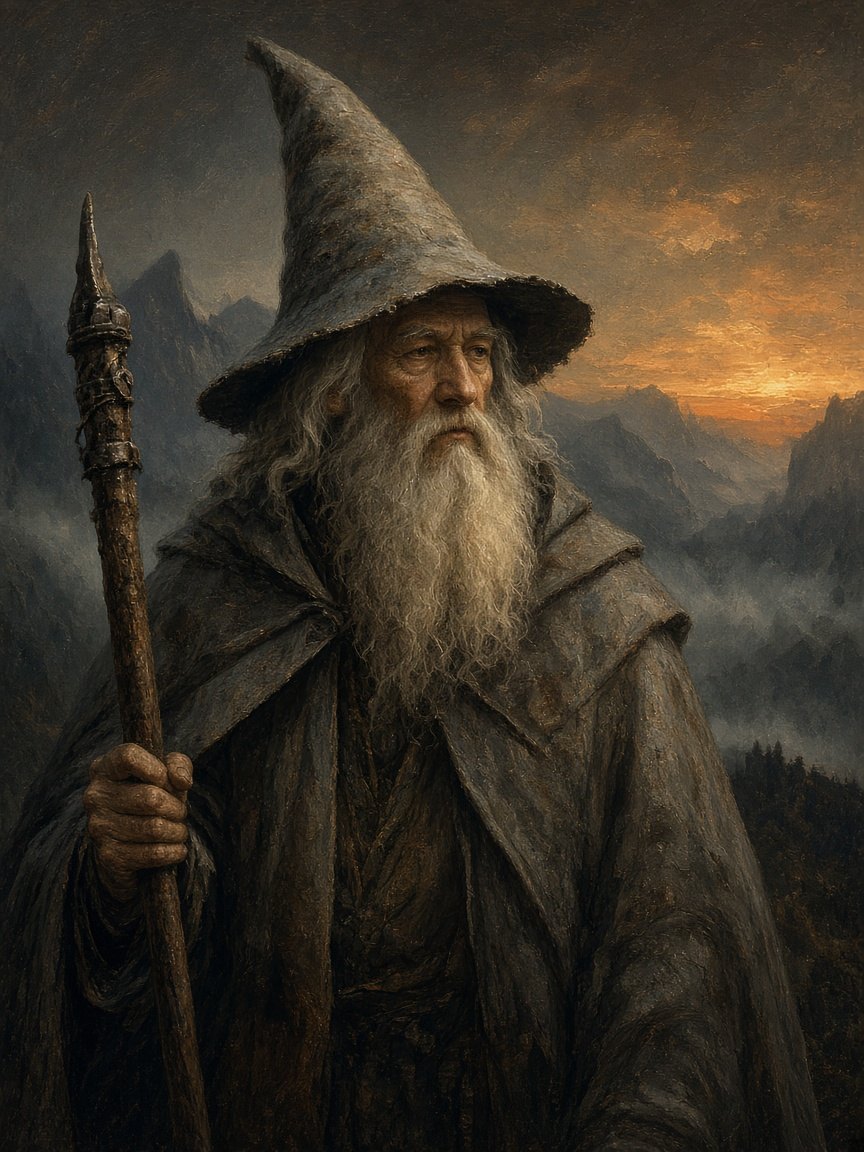
Gandalf
Grey Pilgrim. White Rider. Servant of the Secret Fire.
Third Age · Middle-earth
Tolkien’s counselor-wizard led by waking courage in others — pity without naïveté, power under charter, hope without pretending to see the end.
20 min read
Most men meet him as a film silhouette: hat, staff, fireworks, a booming voice on a bridge. Useful as far as it goes — and it does not go far enough. The Gandalf worth studying is the figure J. R. R. Tolkien built across The Hobbit, The Lord of the Rings, and the deeper legendarium behind them: not a stage magician, not a warlord in grey wool, but a counselor whose power is almost always moral before it is spectacular. He is sent to stir courage, not to collect subjects. He fails when he forgets that. He wins when he remembers the small.
Read him as a leadership text written in myth. Tolkien was a Catholic philologist who had seen industrial slaughter in the Great War and then spent decades inventing a secondary world where providence works through free choices rather than puppet strings. Gandalf is one of those choices made flesh — or rather, made flesh-like. What follows is not cosplay advice. It is a character study for men who must lead households, crews, congregations, and communities without becoming Saruman.
Who he was: Olórin before the roads of Middle-earth
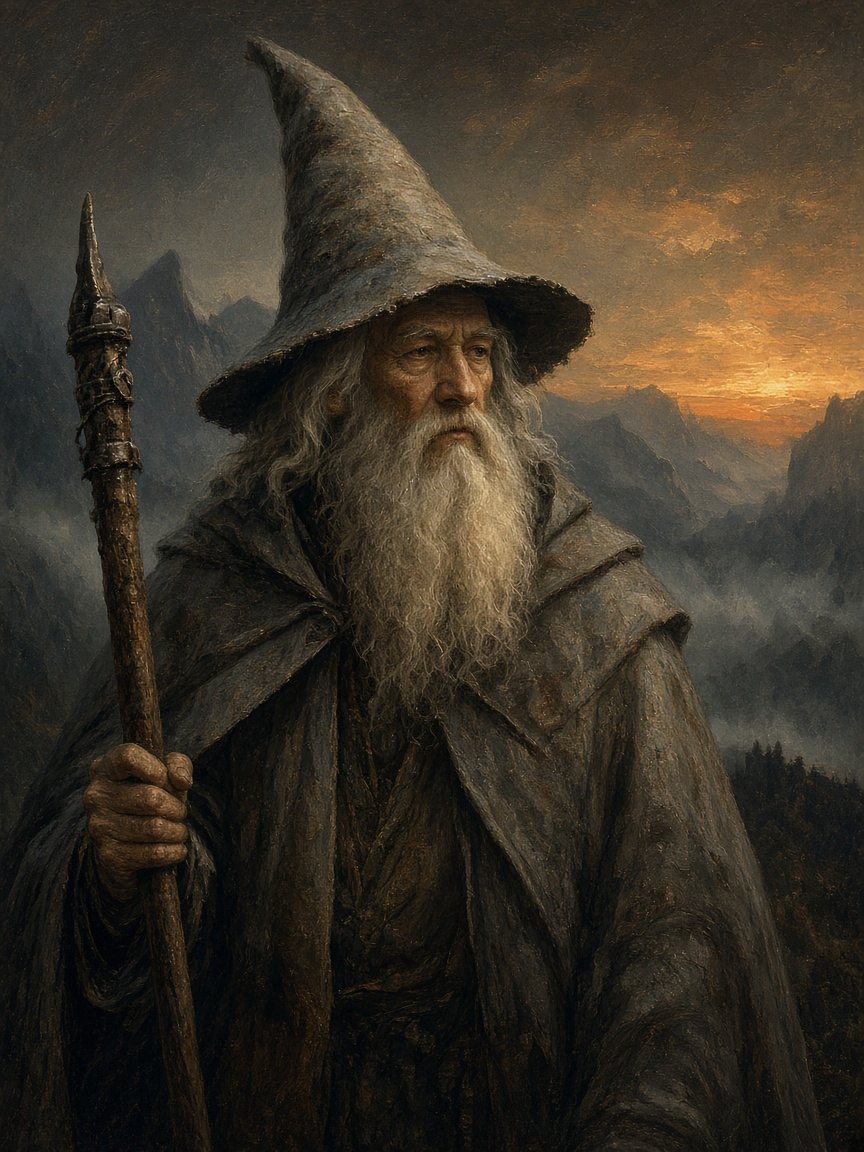
In the deep background Tolkien published and left in draft, Gandalf is not “born old.” He is Olórin, one of the Maiar — lesser Ainur, angelic spirits who entered the world to serve the Valar. In Valinor he was associated with Nienna, the lady of pity and mourning, and with Irmo (Lórien), master of visions and dreams. That pedigree matters. Before he ever lit a pipe in the Shire, his formation was compassion and counsel, not domination.1
When the Valar sent the Istari — the Wizards — to Middle-earth in the Third Age, the mission was deliberately limited. They were to advise the Free Peoples against Sauron, to kindle resistance, to refuse the shortcut of ruling men by open display of power. They came in the bodies of old men: vulnerable, hungry, capable of weariness and temper. Tolkien is clear that this was not costume for fun. Embodiment was pedagogy. Authority that cannot suffer cannot teach endurance; power that never tires tempts its holder to treat other wills as furniture.
Among the five, Curumo (Saruman) was reckoned the greatest in lore; Olórin was not the loudest candidate. In one account Manwë still chose him, and Olórin confessed fear of Sauron. That fear is not a flaw in the story. It is the first leadership lesson: the right man for a hard mission is often the one who knows the enemy is real. Bravado that cannot name danger is not courage. It is marketing.
On the roads he gathered names the way a good man gathers responsibilities: Mithrandir among the Elves (“Grey Pilgrim”), Tharkûn among the Dwarves, Incánus in the South, Gandalf among Men and Hobbits — “Wand-elf,” the stranger with a staff. He did not insist on one brand. He accepted the name that let him be useful in the room he was in. Ego wants a single title. Mission wants access.
Personality: fire, mirth, and the sudden edge
Gandalf is not serene wallpaper. Hobbits love him for fireworks and stories; kings learn he can scorch a room with a sentence. The personality is a chord, not a note. Tolkien refused the cardboard sage who never raises his voice and never laughs. He wrote a counselor with pulse.
Mirth without frivolity. He laughs, smokes, teases, and keeps festival when festival is not denial. Tolkien understood that joy is not the opposite of seriousness. Despair’s favorite lie is that only grimness is adult. Gandalf’s humor is a form of metaphysical confidence: if the world is still worth saving, it is still worth enjoying in the pauses. Men who can only lead by perpetual emergency eventually invent emergencies so they can feel important. A household that never feasts will not survive on strategy memos alone.
Temper under harness. He snaps at Pippin on the walls of Minas Tirith; he storms at Butterbur’s forgetfulness; he rebukes Denethor’s lethal pride. The temper is real. What matters is its aim. It is almost always aimed at cowardice, delay that kills, or the refusal to see. It is rarely aimed at the weak for being weak. That distinction separates fatherly anger from narcissistic rage. Washington had a temper. So does Gandalf. The usable model is not “never feel heat.” It is “do not spend heat on your own glory.” Ask, after anger, whether anyone was protected or only diminished.
Curiosity as duty. He researches the Ring for years. He walks when flying would be easier. He listens to Barliman, to Radagast, to the gossip of inns. Intelligence work in Tolkien is not a laptop glow; it is miles and memory. Leaders who despise small sources eventually fly blind into large disasters. The man who will not ask the bartender what he saw will someday be surprised by an army.
Affection that refuses to own. He loves the Shire without annexing it. He loves Frodo without replacing Frodo’s will. Mentorship that becomes possession is Saruman’s road in softer shoes. Gandalf’s affection leaves room for other people’s agency — including their failure. Love that cannot tolerate another person’s freedom was never love; it was appetite with kinder vocabulary.
Memory as moral faculty. He remembers the old names of places, the debts between peoples, the long defeat that still does not license surrender. In an age that treats amnesia as liberation, Gandalf’s scholarship is a kind of faithfulness. Men who will not remember cannot repent, cannot honor, and cannot plan past the next dopamine cycle.

The charter of his power: counsel, not empire
Saruman is the cautionary mirror. He begins as head of the White Council’s order and ends as a voice that wants the Ring “for knowledge, rule, order.” The speech in Orthanc is every managerial temptation dressed as necessity: the enemy is too strong; purity is naïve; we must use the Enemy’s tools; the wise must decide for the foolish. Gandalf’s refusal is not aesthetic. It is theological and practical at once. To take the Ring is to become what you fight. “He that breaks a thing to find out what it is has left the path of wisdom,” he tells Saruman — a line that still cuts any man who destroys a marriage, a church, or a conscience to prove he is clever.2
Tolkien later described the wizards’ brief in moral language: they were messengers, forbidden to match Sauron’s force with force in open contest for supremacy, meant instead to awaken the courage of Elves and Men.3 Translate that out of myth and you have a doctrine of leadership for free people: your job is to call forth agency, not to replace it. A father who micromanages every risk raises dependents. A pastor who builds a personality cult raises spectators. A commander who cannot delegate builds a machine that dies when he sleeps.
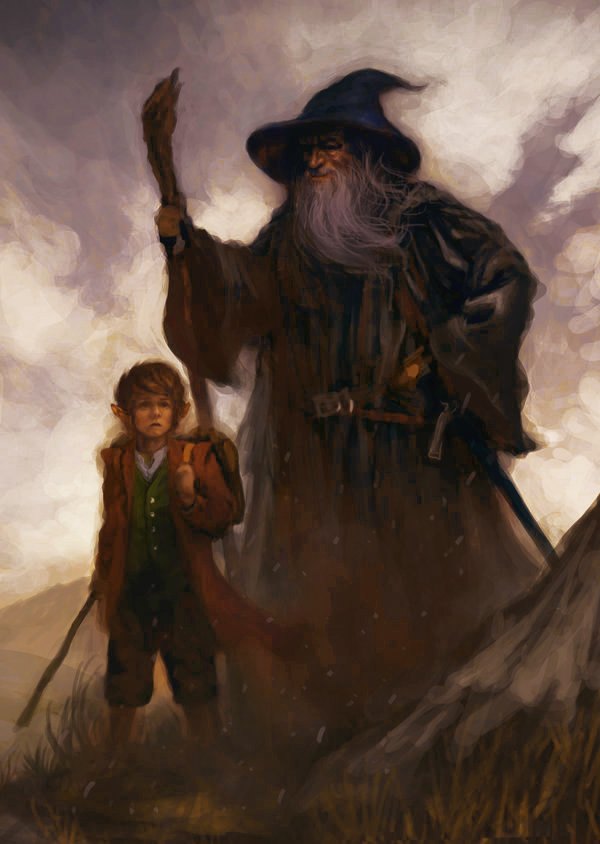
Gandalf’s “magic,” when it appears, usually serves disclosure or protection — light in dark places, fire against wolves, a broken bridge, a word that clears a mind. The spectacular is rare because the mission is formation. If he solved every problem with lightning, the Free Peoples would never become free. That is also why he invests so heavily in Hobbits. The small must learn to carry.
.jpg)
The Hobbit pattern: interrupt comfort, trust the unlikely
The Hobbit opens with a burglary of Bilbo’s respectability. Gandalf marks the door. He recruits a reluctant hobbit into a dwarvish quest that looks, on paper, like folly. The leadership move is not cruelty. It is refusal to let a capable soul die of softness. “I am looking for someone to share in an adventure,” he says in effect — and adventure here means exposure to reality outside the padded room.
Modern men often reverse the pattern. They protect boys from difficulty and then wonder why the boys cannot lead. Gandalf’s wager on Bilbo is the opposite wager: competence is revealed under load. He does not pretend the road is safe. He does insist that Bilbo’s life is larger than tea-time. Comfort is a gift; comfort as a life-plan is a quiet form of despair.
Notice also what Gandalf does not do on that quest. He leaves. He returns. He is not a permanent babysitter. The company must become a company. That rhythm — initiate, withdraw enough for growth, return at need — is the difference between mentoring and controlling. Fathers who never leave the project board never raise partners. They raise employees of their anxiety. The same is true of pastors and managers who cannot bear to watch a younger man struggle for ten minutes without snatching the tool back.
“All we have to decide…”: agency under doom
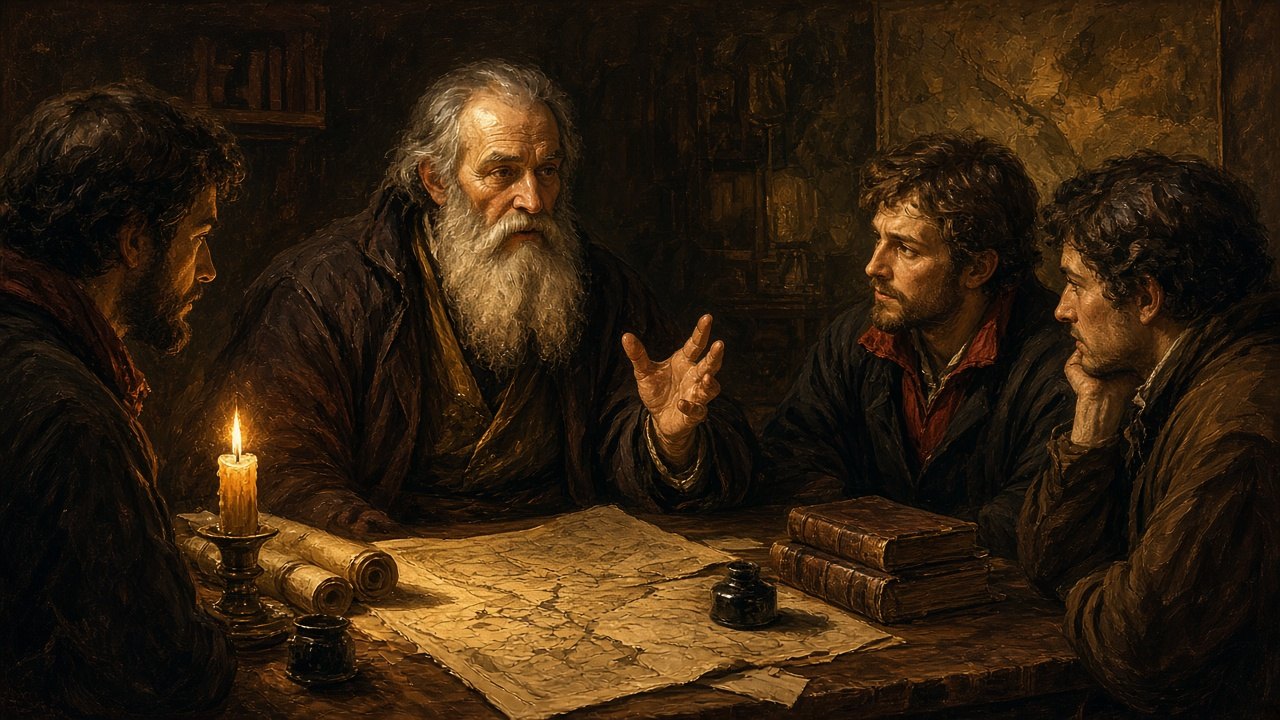
In The Fellowship of the Ring, after Frodo learns what the Ring is and what hunting it will cost, he wishes the blow had fallen in another age. Gandalf’s answer is among the most quoted sentences in modern English letters — and still among the least obeyed:
“So do I… and so do all who live to see such times. But that is not for them to decide. All we have to decide is what to do with the time that is given us.”4
Strip the fantasy frame and the sentence is a ethics of adulthood. You do not choose the century, the diagnosis, the economy, the family you inherited, or the decadence of your city. You choose your next faithful act inside those constraints. Men waste years litigating the premise — if only the times were otherwise — because litigating the premise feels like work and costs nothing. Gandalf forbids the alibi. The time is given. Decide.
This is not stoic indifference. Frodo’s fear is honored; the wish is shared. Then the wish is relativized. Leadership that only validates feelings leaves people stuck in them. Leadership that only barks orders breaks people. Gandalf does both halves: solidarity, then assignment.
Pity as strategy: the Gollum doctrine
When Frodo says it was a pity Bilbo did not kill Gollum, Gandalf answers with a moral vision that later saves the Quest:
“Pity? It was Pity that stayed his hand. Pity, and Mercy: not to strike without need.… Many that live deserve death. And some that die deserve life. Can you give it to them? Then do not be too eager to deal out death in judgement.… The pity of Bilbo may rule the fate of many.”5
This is not soft relativism. Gandalf does not say Gollum is safe, clean, or owed a seat at the high table. He says judgment that pretends to omniscience is a usurpation. He also says that mercy can be causally decisive in a world where providence threads free acts together. At the Crack of Doom, when Frodo’s will finally fails, it is Gollum’s survival — the fruit of pity — that destroys the Ring. Tolkien’s eucatastrophe is not an argument against courage. It is an argument against the fantasy that you can see the end of every moral thread before you cut it.
For men: your household will include the difficult son, the addicted brother, the employee who failed you, the neighbor who tests patience. Justice still exists. Boundaries still exist. But the eagerness to “deal out death in judgement” — social death, reputational death, the pleasure of being done with someone — often serves pride more than righteousness. Gandalf’s standard is need, not appetite.
There is a spiritual genealogy here. Olórin’s schooling under Nienna was pity. The Wizard’s finest strategic insight is therefore not a battle map. It is a disposition. Character is logistics.
Moria: the bridge where titles burn off
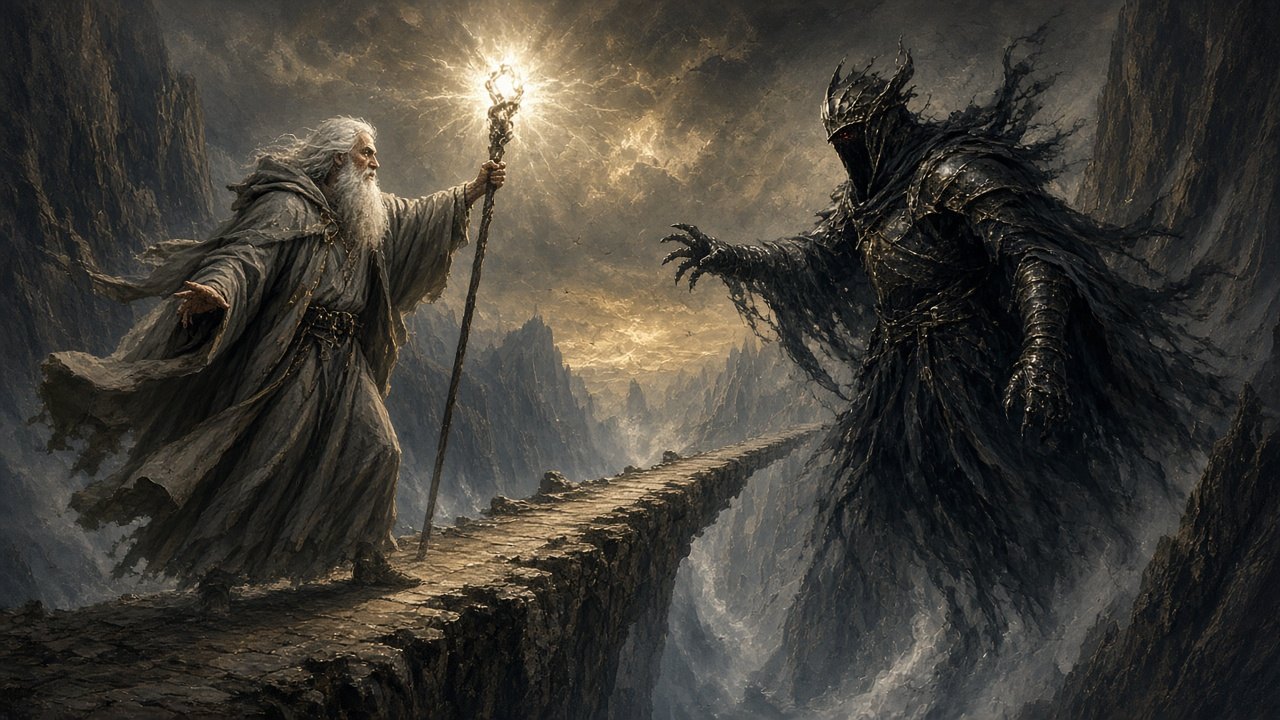
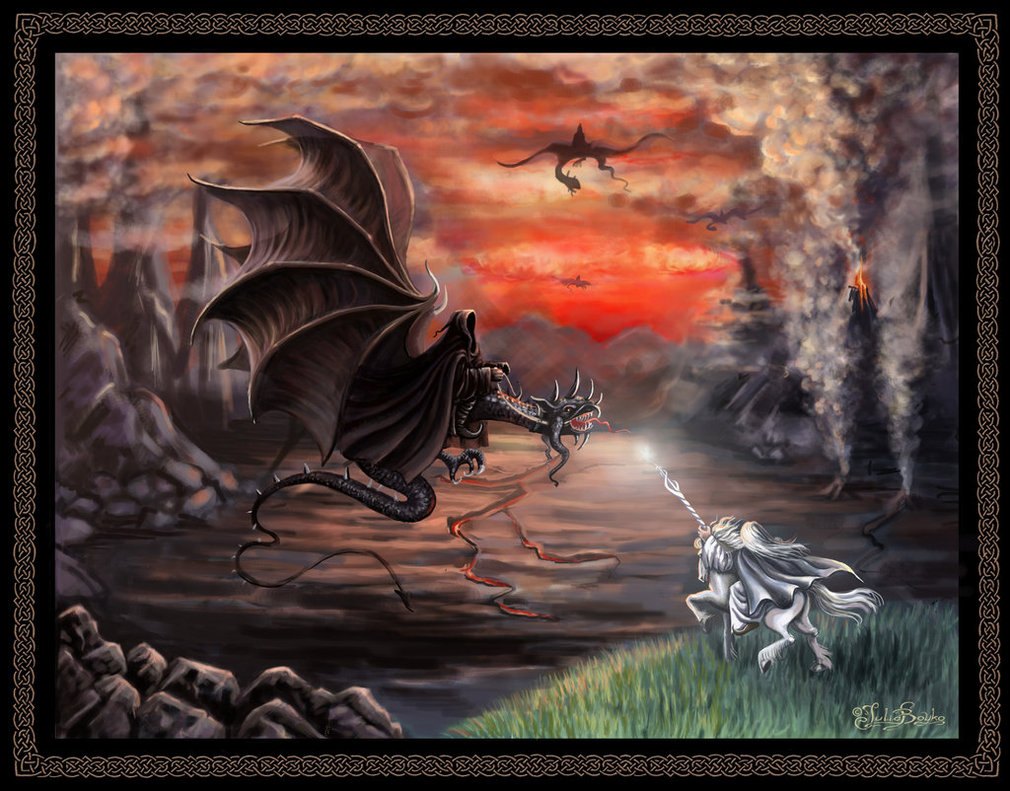
In Khazad-dûm the fellowship is hunted. The Balrog comes — a corrupted Maia, a peer in origin, a nightmare in flame. Gandalf holds the narrow bridge and speaks the words that have entered popular memory because they sound like thunder and are, underneath, a job description:
“I am a servant of the Secret Fire, wielder of the flame of Anor. You cannot pass.… Go back to the Shadow! You cannot pass.”6
Servant. Not proprietor. Not “the most powerful person in the room.” Servant of a fire he did not kindle. Then he breaks the bridge, falls with the enemy, and — from the company’s point of view — dies.
Leadership reaches a point where presence on the dangerous edge is non-negotiable. You can delegate spreadsheets. You cannot always delegate the thing that will kill the people behind you if you flinch. Gandalf’s stand is not adrenaline addiction. It is substitutionary courage: the stronger holds the gate so the weaker can run.
Men who want the authority of Gandalf without the bridge want theater. Rank without shared risk is costume. Tolkien makes the cost explicit. The wizard who falls is the same counselor who laughed in Bag End. The mirth does not cancel the martyrdom; it proves the life was larger than dread.
White: authority clarified, not inflated
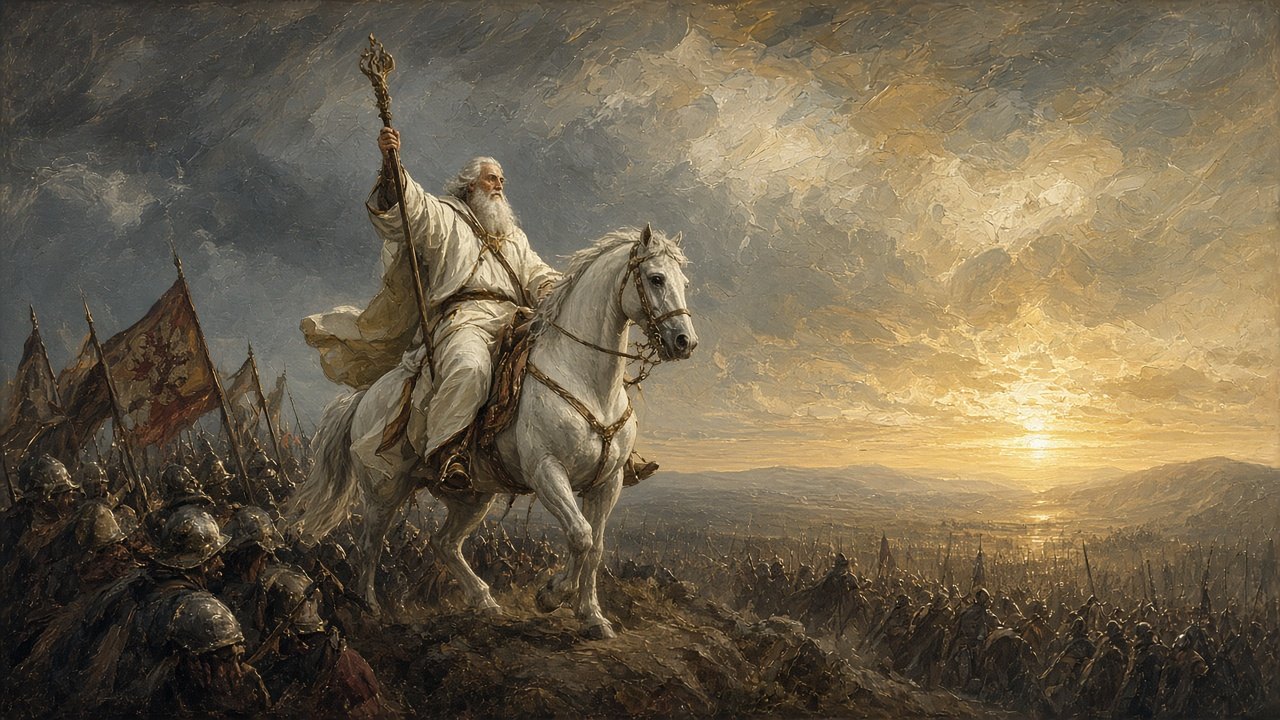
He returns as Gandalf the White. The change is easy to misread as a power-up in a game. Tolkien frames it as purification and completion of office. “Yes, I am white now,” he tells his friends. “Indeed I am Saruman, one might almost say, Saruman as he should have been.”7 The point is devastating: Saruman’s seat was never the problem. Saruman’s will was. White is what Grey was always meant to become if fidelity held.
After death-and-return he is less patient with fog and more able to command when command is required — Théoden’s hall, the gates of the City, the last debates before the Black Gate. Yet the charter does not flip into tyranny. He still does not seize the Ring. He still serves ends he does not own. Elevation that stays under vocation is maturity. Elevation that graduates into self-worship is Orthanc.
For men who “level up” — promotion, money, platform, ordination — the Gandalf test is simple: did the new strength make you more precisely a servant of the mission, or more available to your appetites? White is clarity. It is not permission to become the Dark Lord with better branding.
Théoden: waking a king without replacing him
In Meduseld, Théoden sits aged beyond his years, listening to Wormtongue. The hall is dim. Policy is delay dressed as prudence. Gandalf’s confrontation is spiritual warfare with political consequences: he exposes the counselor of despair, calls the king by his true name and strength, and then — critically — puts the king back on his own horse.
He does not become King of Rohan. He restores Rohan’s king to Rohan. That is the difference between prophetic leadership and takeover. Many strong men enter weak institutions and quietly enjoy the dependence they create. Gandalf’s joy is the opposite: Théoden rides again; Éomer is trusted; the Mark remembers itself.
Wormtongue’s method is worth naming because it is common. He isolates, flatters fear, reinterprets every call to action as rashness, and makes the leader’s decline feel like wisdom. He is the friend who always has a reason you should not attempt the hard thing. He is the advisor who confuses your fatigue with philosophy. Gandalf’s counter-method is light, truth-telling, and the recovery of agency. If you lead a home or a team, ask which voice you reward: the one that keeps people small and grateful for your management, or the one that returns them to their office.
There is a domestic version of Meduseld. A husband scrolls while his house cools into mutual contempt; a father lets a mother’s anxiety or a culture’s sneer define manhood for his sons; a pastor lets a board’s fear set the ceiling of obedience. The Gandalf move is not theatrical domination. It is naming the lie, opening the shutters, and handing the man back his sword — or his Bible, or his tools, or his children at bedtime. Awakening that ends in your permanent centrality was never awakening. It was a coup.
Denethor: when counsel meets despair in high places
Denethor, Steward of Gondor, is intelligent, sacrificial in his fashion, and ruined by pride and the palantír’s selective revelations. He has borne long strain. He has also decided that only his reading of the board is adult. Gandalf’s counsel is heard and then weaponized against itself. The steward chooses the funeral pyre over the living son, and the city almost inherits his despair as policy.
Tolkien is ruthless here. Knowledge without hope becomes cruelty. Rank without humility becomes a tomb. Gandalf cannot save a man who has made despair an identity. He can only limit the blast radius — and he does, for Faramir, for the City’s command structure, for the possibility that Gondor still has a future beyond one unbroken will.
The lesson for men is uncomfortable. You may be right about threats and still wrong about what to do next. Denethor’s facts are often sharper than the hobbits’. His metaphysics are dead. “Despair is only for those who see the end beyond all doubt. We do not,” Gandalf insists in the councils of war.8 Epistemic humility is not weakness. It is the refusal to play God with incomplete vision.

Hope, not optimism
Gandalf is not a motivational poster. He knows the Enemy’s strength. He plans for failure points. He sends the Ring into Mordor with a hobbit because conventional power cannot win the real war. Hope in Tolkien is not the belief that you will get what you want. It is the refusal to let evil write the last chapter while your will can still move.
In his essay “On Fairy-Stories,” Tolkien named the sudden joyous turn eucatastrophe — the consolation of the happy ending that does not deny sorrow but breaks its claim to finality.9 Gandalf lives as if eucatastrophe is possible without being owed. That posture keeps men working when metrics scream otherwise. Optimism says, “It will probably be fine.” Hope says, “It may not be fine — and I am still responsible for the next right act.”
At the Field of Cormallen, when the Quest has succeeded beyond expectation, Gandalf’s gentleness returns in a sentence that should be read at more bedsides and fewer award stages: “I will not say: do not weep; for not all tears are an evil.”10 Strength that cannot make room for tears is brittle. The White wizard who broke a Balrog also blesses grief. Wholeness includes both.
What his character actually looked like
Strip the hat and the meme, and the usable pattern remains:
- Mission over brand. Many names, one errand: awaken courage against a real Enemy.
- Power under charter. Counsel first; spectacle rare; rule refused.
- Love of the small. Hobbits are not mascots. They are the strategy.
- Pity with eyes open. Mercy without naïveté; judgment without bloodlust.
- Presence at the bridge. Shared risk when the gate must be held.
- Restoration of others’ offices. Théoden rides; Gandalf does not seize the throne.
- Hope without omniscience. Act without pretending you see the end.
- Joy that survives knowledge. Fireworks and pipe-weed are not denials of war; they are refusals to let war own the whole soul.
What men can learn — Faith, Family, Community
Legends of Men orders a man’s life as spiritual leadership, then household leadership, then provision. Gandalf maps onto that order with unsettling precision.
Faith. He is, in Tolkien’s own framing, an incarnate messenger — not a god to be worshiped, but a servant of the One’s purposes in history.11 For Christian men the rhyme is obvious without forcing allegory Tolkien resisted: authority is received, not invented; the Enemy is real; despair is a lie with good graphics; pity and courage belong together; you are not the Secret Fire. Pray, then act. Do not reverse the verbs.
Family. Gandalf is not a husband in the tale, yet he mentors like a father who wants sons strong enough to leave him. Bilbo, Frodo, Faramir, Pippin — each is called up, corrected, and released into responsibility. That is household leadership at civilizational scale. Soft men hoard children’s dependence because it feels like love. Strong men train transfer of weight.
Community. He stitches elves, men, dwarves, and hobbits into a fellowship that none of them could be alone. He attends councils. He carries messages. He remembers inns and forgotten roads. Community is not a vibe channel. It is logistics plus loyalty plus truth-telling when Wormtongue speaks. Build rooms where courage is contagious and despair is named as the parasite it is.
Provision. His “net worth” is almost a joke — a pony, a staff, a reputation. Yet he is never confused about economics of mission: food for companies, timing of marches, the cost of delay, the danger of Isengard’s industry without conscience. Provision serves the errand. The errand does not exist to decorate the provider’s ego. Men who reverse that sentence become little Sarumans with nicer lawns.
Against two counterfeits
Two cheap copies of Gandalf circulate in our culture, and both should be refused.
The first is the aesthetic wizard: merch, quotations, the posture of wisdom without the miles. He collects maps he will not walk and doctrines he will not obey. Tolkien’s Gandalf earns speech by errands. If your “counsel” has not cost you sleep, money, reputation, or comfort, check whether you are Olórin or only a cosplayer of concern.
The second is the technocratic Saruman: brilliant, urgent, certain that ordinary people cannot be trusted with their own freedom. He will save the Shire by industrializing it, save the church by turning it into a brand, save the family by managing everyone like a risk portfolio. Gandalf’s answer is slower and prouder of small wills. He would rather a hobbit succeed imperfectly than a wizard succeed by possession.
Between those counterfeits stands the real pattern: spiritual seriousness, affection for the humble, refusal of cursed shortcuts, and courage that pays in person.
A standard, not a costume
You will not speak with the voice of thunder on a mountain bridge. You may never counsel a king. You can still refuse the Ring in your own register: the shortcut that would let you rule your wife by fear, your employees by lies, your congregation by spectacle, your city by contempt for the small.
Decide what to do with the time that is given you. Hold the bridge you were actually assigned — a child’s bedtime, a payroll, a parish conflict, a friend’s collapse — without demanding a larger stage as payment. Practice pity without pretending evil is cute. Practice courage without advertising it. Keep a little mirth so that your seriousness does not curdle into Denethor.
Gandalf’s legend endures because Tolkien wrote a man (or man-shaped messenger) who could be terrible in the right cause and tender in the right hour — and who treated other people’s freedom as the treasure to be guarded, not the obstacle to be managed. That is leadership worth imitating in an age rich in voices and poor in servants.
Be grey enough to walk roads. Be white enough to tell the truth. Be small enough to love hobbits. Be hard enough to stand when the shadow comes. And when the work is done, do not cling to the staff as an identity. The errand was never your ownership. It was your honor.
Notes
Click a superscript in the text to jump here; use ↩ to return. Short quotations from Tolkien are for criticism and commentary; read the books themselves.
- Olórin / Istari: The Silmarillion (“Valaquenta”; “Of the Rings of Power and the Third Age”); fuller Istari material in Tolkien, Unfinished Tales, “The Istari.” See also summaries in Hammond & Scull’s Reader’s Companion. ↩
- Gandalf to Saruman at Orthanc — The Fellowship of the Ring, Book II, “The Council of Elrond” (recounted) / “The Voice of Saruman” context in The Two Towers. Quotation: breaking a thing to find out what it is. ↩
- Mission of the Istari: Unfinished Tales, “The Istari”; cf. Letters of J. R. R. Tolkien on the wizards as emissaries forbidden to dominate by force. ↩
- The Fellowship of the Ring, Book I, “The Shadow of the Past” — “All we have to decide is what to do with the time that is given us.” ↩
- The Fellowship of the Ring, Book I, “The Shadow of the Past” — pity, mercy, and Gollum. ↩
- The Fellowship of the Ring, Book II, “The Bridge of Khazad-dûm.” ↩
- The Two Towers, Book III, “The White Rider.” ↩
- The Return of the King, Book V, “The Last Debate” (and related counsel scenes) — despair and incomplete knowledge. ↩
- J. R. R. Tolkien, “On Fairy-Stories” (1939 lecture; expanded in Tree and Leaf) — eucatastrophe. ↩
- The Return of the King, Book VI, “The Field of Cormallen.” ↩
- Tolkien on the nature of the Istari / angelic emissaries: The Letters of J. R. R. Tolkien (ed. Humphrey Carpenter), esp. letters discussing Gandalf’s return and the wizards’ function; cf. Letter 156 and related. ↩
Further reading: J. R. R. Tolkien, The Hobbit; The Lord of the Rings; The Silmarillion; Unfinished Tales; The Letters of J. R. R. Tolkien; Tom Shippey, J. R. R. Tolkien: Author of the Century; Bradley J. Birzer, J. R. R. Tolkien’s Sanctifying Myth.
Prefer plain text? Markdown version
← All legends